
PAST
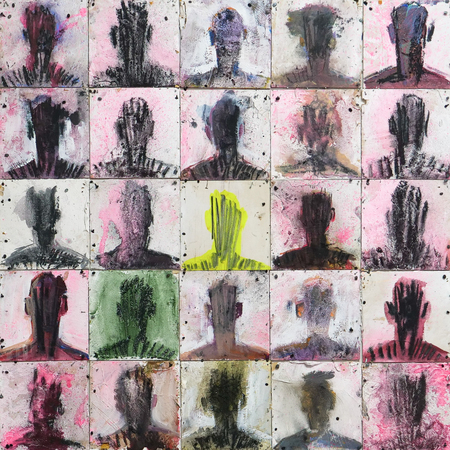
CONNECT (CA.025.proto)_관계 (CA.025.proto) acrylic, spray paint, charcoal, F-pin, nail on panel 60.6 x 60.6cm 2024
Connected Gaze
안희진 작가의 이번 전시 <Connected Gaze>는 시각적 주체성과 객체성에 대한 심도 깊은 탐구를 다루고 있다. 우리는 무언가를 능동적으로 본다는 점에서 시각적 주체인 듯하지만, 남에게 어떻게 보여지는가에 끊임없이 신경을 쓴다는 점에서 타자의 시선에 종속되어 있음에 틀림없다. 이는 타인의 관심과 시선에만 몰입하려 드는 오늘날 소셜미디어 세태에 대한 조소를 넘어선 존재론적 테제이다. 인간은 사회적 존재로서 타자의 응시와 사회적 시선을 통해 배태되고 성장할 수밖에 없기 때문이다. 그렇다면 우리는 과연 어떻게 스스로의 온전한 자아를 담지하면서 또한 동시에 사회적이고 관계적인 시선 속에 올곧게 자리매김할 수 있는가? 이 시선의 사회성과 수동성은 이번 전시에서 선보이는 작품을 관통하는 주제이다.
보는 주체이면서 보여지는 객체로서의 이중성은 사실 작가의 삶과 예술 전체를 관통하는 고민이기도 했다. 양쪽 눈이 약간 비대칭적인 작가는 어린 시절부터 자신의 생래적인 특징으로 인해 남에게 자신이 어떻게 보여지는지에 대한 고민을 이어 나갔다. 좌우 눈의 크기와 움직임의 차이는 어릴 적 부모님의 염려를 불러일으킴과 동시에, 때론 마치 윙크를 하는 것처럼 보여 남들의 오해를 사곤 했다. 때문에 작가는 타자의 응시에 민감하게 반응하며 눈의 움직임을 의식적으로 통제하려 들거나, 굳이 필요하지 않은 상황에서도 안경을 착용하여 자신의 눈을 가려야만 했다. 그의 눈은 세상을 보는 주체로서의 눈이기 이전에 세상에 의해 보여지는 객체로서의 눈이었던 것이다.
이 시선의 수동적 방향성에 대한 특별한 경험은 보이는 자로서 인간 존재에 대한 안희진 작가의 독특한 예술적 해석으로 이어졌다. 큰 호응을 받았던 그의 '보통사람' 연작은 타인의 일상적인 응시 너머에 풍부하고 복잡한 인간 감정이 존재함을 그려낸 인물화 시리즈였다. 이 인물들은 표정 너머의 비가시적 감정을 풍성한 색채로 드러내며, 보이는 것이 결코 전부가 될 수 없음을 역설한다. '창(窓) smile' 연작은 이들 인물상 표면에 스마일 아이콘이 그려진 아크릴 판을 겹쳐 놓은 개성적인 시리즈이다. 이 부가적인 레이어는 타인의 응시에 대한 가림막임과 동시에 그 너머에 숨겨진 내면으로 시선을 유도하는 열린 창이기도 하다.
이번 개인전에서 선보이는 ’CONNECT / 관계’ 연작 역시 타자의 시선과 관계 속에 던져진 개인들에 대한 성찰을 보여준다. 연작의 주를 이루는 그리드 작업들은 형상이 불분명한 여러 작은 인물상들로 화면이 빼곡히 채워져 있다. 이 인물상들은 처음에는 모두 같은 색의 배경을 지닌 미니 사이즈 패널에서 시작하여, 표면이 매끄럽게 처리된 후 목탄으로 고유의 형태가 그려진다. 그 후 에어 브러시로 색을 칠하는 과정 등을 거치면서 목탄의 입자는 우연한 얼룩으로 변형되고, 브러시 레이어에 따라 각기 다른 톤을 띠게 된다. 고유의 색과 형태가 임의적으로 변형된 이 익명의 군상들은 때론 선명하기도 하고 때론 배경색에 완전히 묻히기도 한다. 이는 거대 사회 속 현대인의 존재감을 은유하며, 작가 역시 이를 “사회 속에서 각각의 개인이 갖는 존재감의 차이”로 설명하고 있다. 여기서 우리는 거대한 틀의 부분이 된 수 많은 픽셀 혹은 개인을 본다. 이들은 눈이 없기에 스스로 볼 수 없고, 사회 혹은 관람객의 관심과 응시를 갈구하겠지만 그것은 시작부터 n분의 1의 경쟁이 될 것이다.
냉소와 현실을 넘어 이 작은 인물 각각에 대한 작가의 애정은 그럼에도 각별하다. 작가는 이 미니 사이즈 패널의 인물상들을 하나하나 붙여 전체적으로 완결된 큰 작품을 만들어낸다. 큰 틀의 시각적 인지 속에 쉽게 묻혀버릴 수도 있지만, 개별 인물의 프레임은 작가의 지난한 작업을 통해 더 이상 쪼개질 수 없는(in-divisible) 고유성을 물질적 형태로 보존한다. 이는 작품명에서도 드러난다. 마치 공산품의 시리얼 넘버처럼 보이는 이 숫자에는 작품에 사용된 패널 조각의 전체 개수가 포함되어 있다. 하나의 큰 프레임으로 조합되었음에도, 결코 환원될 수 없는 개별자들의 존재는 이 숫자를 통해서도 기억된다.
이 그리드 연작 중에는 심지어 패널의 가운데 부분을 도려내어 개인의 존재를 드러내는 작업도 있다. 이 경우에 배경은 앞선 작품들처럼 개별 패널을 모자이크로 연결한 것이 아니라 처음부터 완전하게 연결된 큰 덩어리 패널이다. 여기에도 개별 인물 군상들이 각 그리드 부분마다 그려져 있으나 수많은 덧칠을 통해 강하게 블랙-아웃되어 있다. 이 견고하고 단일한 어둠은 개인의 존재를 압도하고 덮어버리는 거대한 암막처럼 보인다. 실제로 그 한가운데를 뚫어내고 홀로 드러난 하나의 작고 얼룩진 초상은 밤바다의 섬처럼 외로운 존재이다. 그럼에도 작가는 이를 우리의 가시세계로 길어 올리는 수고로움을 결코 마다하지 않았다.
프레임 속의 프레임을 보여주는 작품들 또한 사회적 관계와 시선에 대한 흥미로운 성찰을 보여준다. 이 작품들은 턴버클이나 케이블타이를 통해 금속 프레임 속에 긴장감 있게 구조 지어진 인물화들이다. 이 작품들은 개인과 사회 간의 비가시적인 긴장관계를 물리적인 인장력을 통해 즉물적으로 드러낸다. 개인을 장악하는 이 인공적이고 산업적인 힘은 인물상을 마치 건조틀 속의 가죽처럼 잡아당기는 강렬한 폭력이다. 마치 피부 리프팅 시술처럼 팽팽하게 잡아 끌어 올려진 인물들은 또한 겹겹의 칠을 통해 화이트-아웃되었거나 블랙-아웃되어 고유의 색채를 잃어버렸다. 사회가 요구하는 틀과 색에 완전히 맞춰져 버린 그들. 그러나 그 대신 이들은 메가 인플루언서를 연상시키는 거대한 존재감을 정면에 드러낸다. 제도적 틀과 개인의 고유성 간의 긴장감(tension)은 사회적 관심(attention)의 역학으로 전이된 것이다. 보이기 위해 보여지는 그들. 정작 그들의 눈은 수많은 이해관계의 층으로 완전히 덮여 있지만, 우리의 시선을 장악하는 데는 부족함이 없어 보인다.
그렇다면 과연 우리의 진정한 초상화는 어디에 있는 것일까? 잘 보이지도 않는 부분의 일부로서 전체를 구성하고 있는가, 아니면 압도적인 존재감을 드러내되 자신의 색을 포기해야만 하는가? 때론 너무 크고 때론 너무 작은 이 인물들은 지금 관람객의 관심을 갈구하며 늘어서 있다. 이것은 눈 없는 자들의 보이지 않는 아우성이다. 이들을 바라보거나 관심을 주는 것은 물론 전적으로 관람객의 자유의지에 달려있을 것이다. 보는 자와 보이는 자, 능동적인 눈과 수동적인 눈, 사회적 관심과 존재론적 고유성 사이의 긴장은 도처에 존재하게 될 것이다.
어쩌면 우리는 스스로의 시선과 타인의 응시가 교차하는 경계에 서 있는지도 모른다. 시선의 주객이 교차하며 만들어지는 긴장 관계야말로 자아와 타자가 상호 작용하는 진실의 장일지도 모른다. 우리는 결국 남의 눈에 잘 띄지 않기를 원하면서 동시에 잘 보이기를 갈구한다. 사회로부터 숨고 사회로 나아가며, 내면을 숨기고 내면을 드러내는 이 얇은 시선의 경계야말로 진정한 자아의 방으로 들어가기 위한 문턱이 아닐까. 이번 전시에서 관람객들은 이 쉽지 않은 질문과 함께 작품들 속에서 보이는 것과 보이지 않는 것 사이의 무한한 가능성을 탐험하게 될 것이다. 이 복잡한 응시와 시선의 교차로에서, 어쩌면 우리는 비로소 인간과 사회 사이의 관계와 그 본질에 더 깊이 다가가게 될지도 모른다.
송진협(미술평론)
Connected Gaze
In his solo exhibition “Connected Gaze,” Ahn Hee Jin delves into the profound exploration of visual subjectivity and objectivity. While we appear to be visual subjects actively engaging with what we see, we are undoubtedly subjugated by how others view us. This is more than just a critique of today’s social media obsession; it is an ontological thesis on human existence. As social beings, we are inevitably shaped and developed through the gaze and social perception of others. Thus, how can we maintain our complete selves while simultaneously positioning ourselves within the social and relational gaze? This dialectic between sociality and the passivity of vision is the central theme running through the works presented in this exhibition.
The duality of being both the subject that sees and the object that is seen has been a pervasive concern in Ahn’s life and art. Having slightly asymmetrical eyes, Ahn has been preoccupied since childhood with how this inherent trait affects others’ perceptions of him. The difference in size and movement between his eyes often caused concern for his parents and sometimes led to misunderstandings, as if he were winking. Consequently, Ahn became highly sensitive to the gaze of others, consciously controlling his eye movements or wearing glasses even when unnecessary to hide his eyes. Thus, his eyes were objects to be seen by the world before they were subjects that saw the world.
This unique experience of passive directionality of vision has led to Ahn’s distinctive artistic interpretation of human existence as the seen. His famous series “Ordinary Person” depicted a rich and complex range of human emotions beyond the everyday gaze of others. These portraits reveal the invisible emotions behind expressions through vibrant colors, emphasizing that what is seen is never the entirety. The “Window / Smile” series adds an acrylic panel with a smiley icon over the surface of these portraits, serving both as a screen against the gaze of others and as an open window guiding the viewer’s gaze to the hidden interior beyond.
The ‘CONNECT / Relations’ series presented in this solo exhibition also reflects on individuals cast within the gaze and relationships of others. The grid works, which dominate the series, are densely packed with indistinct small figures. These figures begin on mini-sized panels with uniform backgrounds, intricately drawn in charcoal on smooth surfaces. Through processes like airbrushing, the charcoal particles transform into random smudges, and brush layers create varying tones. These anonymous masses, with arbitrarily altered colors and forms, sometimes stand out vividly and other times blend into the background, reflecting the varied presence of modern individuals within society. Some people appear prominent and significant, while others are barely noticed or remain unseen. Whether distinctive or not, they all represent mere pixels within a larger whole. Without eyes, they cannot see themselves and must seek the attention and gaze of society or viewers, competing with neighboring pixels or individuals.
Beyond cynicism and reality, Ahn’s deep affection for each small figure is evident. He meticulously combines these mini-panel figures to create a complete large work. While they can be easily overlooked within the broader visual context, the individual frames retain their unique, indivisible identities through the artist’s painstaking efforts. This is reflected in the titles of the works, where numbers, resembling serial codes, indicate the total number of mini panels used to create each large painting. Despite their integration into a single large frame, the irreplaceable individuality of each figure is preserved and remembered through these numbers.
Some grid works even involve cutting out the central part of the panel to highlight individual presence. In these cases, the background is a large, continuous panel from the beginning, unlike the mosaic of individual panels in previous works. These large panels were originally filled with individual figures in each grid section but are heavily blacked out through multiple layers of paint. This solid, uniform darkness resembles a massive blackout curtain overwhelming individual existence. In the center, a small, stained portrait stands alone, like an isolated island in a night sea. Nevertheless, Ahn is committed to the effort of bringing this isolated figure into our visible world.
The frame-within-a-frame works also offer intriguing reflections on social relationships and the gaze. These works, constructed with tension using turnbuckles or cable ties within metal frames, physically reveal the invisible tension between individuals and society through material stress. This industrial and artificial force, which seizes the figures, evokes the intense violence of stretching leather on a drying frame. The figures, tightly pulled up as if undergoing skin lifting, are whitewashed or blacked out through multiple layers of paint, losing their inherent colors. Conformed entirely to the societal demands of form and color, they instead project a colossal presence reminiscent of mega influencers. The tension between institutional frameworks and individual uniqueness transforms into the dynamics of social attention. These figures, striving to be seen, captivate our gaze despite their eyes being covered by layers of various interests.
Where does our true identity lie? Are we simply part of an unseen whole, or do we need to conform to social expectations and power, sacrificing our unique traits to stand out? These figures, sometimes appearing prominent and sometimes barely noticeable, seek the viewer’s attention. The responsibility of offering that attention rests entirely on the viewer. This tension between the active and passive gaze, between social attention and individual uniqueness, is ever-present.
We may find ourselves at the intersection where our gaze meets the gaze of others. This crossing point creates a field of tension where self and other interact authentically. We simultaneously want to remain unnoticed and crave to be seen. This delicate boundary of gaze, where we hide and reveal ourselves to society, may be the threshold to discovering our true selves. In this exhibition, viewers will explore the myriad possibilities between visibility and invisibility, delving into the relationship between humanity and society within this complex interplay of gazes.
Jin Hyup Song (art critic)
GALLERY MARK
3, Sapyeong-daero 20-gil, Seocho-gu, Seoul, Korea
T. 82 2 541 1311
F. 82 2 541 1317
Info@gallerymark.net
Monday - Saturday ( 10:00am - 6:00 pm )
Sign up to receive emails featuring the latest events.