
PAST
김기태 개인전 : Unknown Artist
2017. 09. 14 - 10. 17
사라질 것 같은, 어스름한 찬란한 찰나.
고연수(평론)
"당신은 다른 관점(차원)으로 여행 중이다.
관점(차원)은, 시야와 소리 뿐 아니라 마음의 차원이다.
경계가 있는 경이로운 곳으로의 여행은 상상의 여행이 될 것이다.
다음(역)은, 트와일라잇 존(Twilight Zone : 중간지대, 경계불분명 지대)이다!"
"You're travelling through another dimension.
A dimension, not only of sight and sound, but of mind.
A journey into a wondrous land whose boundaries are that of imagination.
Next stop, the Twilight Zone!"
-Rod Serling-
16세기부터 애초에 화가들에 의해 그림 그리는 기계로 사용되었던 카메라 옵스큐라는 이후 평탄치 않은 국면을 맞는다. 빛에 의해 이미지가 그려지는 경이로운 그 기계는 당대 과학자들의 열화와 같은 성원으로 소중하게 다뤄지며 과학계로 자연스레 위상을 잡게 된다. 기계를 통해 그려진 사진은 1850년대 이후 시각예술의 전당이었던 살롱전에 나름의 예술의 명망을 갖춰 입고 시각예술품으로서 전시가 되지만, 역시 당대 미술품과는 구분된 공간에 놓여짐으로 확고하지 못한 어정쩡한 "중간 지점"으로서의 위치를 잡게 된다. 19세기 이후 사진은 그 어떤 분야보다도 비약적인 발전을 도모하고 상당부분 소정의 성과를 이루어낸다. 과학적 힘을 가진 획기적인 기계에 예술가들의 관점을 듬뿍 담고 있는 사진은 모호한 태생적 특수함을 딛고 예술성 획득 의지가 더해지고 있었기 때문이다.
카메라와 사진이 선천적으로 지닌 묘함이 작가 김기태의 작품에서 읽혀지는데 복잡한 작업의 과정으로 인한 결과로 볼 수 있다. 캔버스에 사진을 인화한 뒤 그 위에 아크릴과 유채로 덧입히는 과정의 작업이다. 특별함 없이 캔버스에 그려진 평면유화 정도로 인지하고 결과물인 작품을 접했을 때와 전 작업의 과정을 알고 다시 작품을 바라보면 사뭇 달라 보이는 것도 이 때문이다. 그냥 평범한 실재 풍경화로 간주하기엔 다소 몽환적인 몽롱한 분위기가 풍기고, 그저 비현실적 풍경화라고 보기에는 또한 실재 같은 차분한 자연이 무심히 펼쳐져 있다. 마치 렌티큘러 사진을 보듯, 이렇게 보면 이렇듯 보이고 저렇게 보면 저렇듯 보인다. 작가 김기태의 작업은 두 가지 매체의 혼용으로 인한 가시적 유희를 유쾌하게 제안하는듯 하지만, 단지 재미있게 그냥 넘어가기에는 어스름한 구석이 느껴진다.
우리는 시각예술에 있어 매체, 물성, 재료, 도구 등의 개념들을 할 수 있는 선까지 밀어붙여 정밀하게 연구하고 구별하여 구분짓고 분석하는 작업에 이미 많이 에너지를 소진했다. 작가 김기태의 작업에는 어떠한 재료를 어떻게 사용했는가의 전통적 관점 보다 또 다른 관점이 필요하다.
시각예술창작자에게 선택되어진 재료(Objet)는 작가와 새로운 관계를 맺는다. 상식적으로 통용되는 그 재료의 보편적인 속성 뿐 만 아니라 작가에 의해 새롭게 발견되거나 혹은 발견되지 못했지만 작가에 의해 새롭게 발굴되어 작가 특유의 조형적 언어로 관객에게 보여진다. 관객은 작품을 통해 작가와 재료 간의 관계를 관조하고 자신이 그 재료와 맺었던 체계 안에서 공감할 수도 또 그렇지 않을 수도 있다. 작가와 재료가 버무려진 작품은 관객에게 또 다른 세상을 '깨닫게' 해주거나 '발견하게' 해준다. 관객이 그 재료에 대해 갖고 있었던 생각, 때로는 새로움과 낯섦으로 때로는 반가움과 공감으로 색다른 체험을 하게 되는 것이 시각예술을 접하고 감상하고 느끼는 전과정일 것이다. 그렇기 때문에 시각예술창작자가 선택한 소위 매체라는 것은 우리가 알고 있는 전통적 도구의 의미를 사실은 훨씬 넘어서는 것이라 볼 수 있다. 하지만 엄밀히 말하면 이미 이 논의는 1900년대 초반에 '레이메이드'로서 생성되어 교란되었고, 1950년대 이후 작가 손에 쥐어진 도구와 재료들은 완전히 그 기능과 속성이 갈기갈기 해체되기도 했던 것이다.
작가 김기태의 작업에서 매체가 주는 기묘한 시각적 효과보다 더 중요한 지점은, 왜 그토록 환타지적 실재의 공간을 연출하느냐이다. 모호한 지점, 중간 지점, 의식과 무의식의 사이, 그 불편해 보이는 지점으로 깊숙이 파고들어가려는 작가의 행위에 더 집중할 필요가 있다.
1초씩 흘러가는 순간이 한없이 길게 느껴지는 멍해지는 찰나, 근사하게 밤하늘을 수놓는 불꽃놀이에서의 불꽃들을 바라볼 때의 감정, 무심히 올려다 본 밤하늘에 반짝이는 별들 사이로 떨어지는 은하수와 유성을 발견했을 때 의식과 무의식의 중간 지점 등을 재현하고 있다. 곧 사라져버리는 찰나가 너무 아름답기 때문에 표현하고 싶다는 그의 바람은 그렇게 아슬아슬하게 중간계쯤을 포착하여 표현하고 있다. 그리고 그 안에 머무르고 싶은 작가의 마음이 또한 함께 담겨있다. '중간 지점'인 '트와일라잇 존'의 공간을 확보하여 재생한 뒤 작가는 그 안으로 숨는다.
작가 김기태의 작품명은 일괄적으로 '작자 미상(Unknown Artist)'이다. 케케묵은 옛날사진들을 보면 대부분 사진 뒷면에 사진을 찍은 장소와 날짜만이 간략히 적혔을 뿐 작자는 미상이다. 누가 찍었는지는 모르지만 그럼에도 유추가 가능한 이유는 사진 속 인물들의 표정, 사진 속 풍경과 상황들의 모습 속에서 작가를 짐작할 수 있다. 설령 짐작이 어려운 알 수 없는 사진이라 할지라도 그 사진 안에는 사진을 찍은 사람도 함께 있다. 사진이 찍힌 상황들의 표정들과 그 안에 녹아있는 사진 찍은 사람의 숨결은 사진에 굳이 찍은 사람의 이름을 넣지 않아도 되는 충분한 이유가 되는 것이다. 시간이 지남에 따라 켜켜이 달라붙어 떼어내려다 남은 사진 속 흔적들까지도 그대로 작가 김기태의 작품 속에서 재현되는 요소들이다. 시각예술에 있어 예로부터 만만하면서도 모든 뜻을 함유할 수 있어 달콤했던 작품명 '무제(Untitled)' 대신 작가 김기태는 과감히 본인을 제외시킨 '작자미상(Unknown Artist)'과 날짜를 작품명으로 매긴다. 작품 속에서 철저히 작가 본인을 소외시켜버렸으나 제거되지 않고 남아있는 이유는 작품 안 사진(기록)에 작가의 덧칠(심리적 시간)이 덮여 그만의 특별한 시공간을 만들고 있기 때문이다. 객관적 기록에 자신의 시간을 덧입히거나 아예 덮어버리기도 하면서 동시에 그 기록을 남겨두려는 행위도 반복한다. 기반 있는 환타지 즉, 일종의 무한히 날아가는 작가의 상상력을 잡아주는 일종의 안전장치와 같은 것을 작가는 걸어두는 것이다. 오롯이 작가 김기태가 만들어 내는 '트와일라잇 존(Twilight Zone)'을 만들기 위한.
작가 김기태는 찍히는 동시에 현실과 과거가 되어버리는 기록 사진에 물리적 시간을 거스르는 일종의 자신만의 시간을 덧입혀 덧칠하며 우리에게도 들어오라고 손짓을 한다. 함께 같은 꿈을 꾸어도 좋고, 또는 다른 꿈을 꾸어도 좋다고.
"놀라운 일입니다. 마음이란……, 거기에 없더라도 볼 수 있게 해주니까요."
-영화 "환상특급(Twilight Zone : The Movie, 1983)" 중 대사-
A Vanishing Dusky, Glorious Moment
Yeon Soo KO ( Art Critic )
"You're travelling through another dimension.
A dimension, not only of sight and sound, but of mind.
A journey into a wondrous land whose boundaries are that of imagination.
Next stop, the Twilight Zone!"
-Rod Serling-
A device called camera obscura have been used since the second half of the 16th century by artists as an aid for drawing and painting. This wonderful device which projected image using light amazed many prominent scientists in those days and soon found a place in the scientific world. The photos developed through this device which showed some artistic prestige in their own way were exhibited as visual artworks in the Salon de Pariswhich was regarded as the most esteemed hall of visual arts. However, the photos were exhibited in an area separate from where the contemporary classical works were being exhibited and were positioned at a rather ambiguous, halfway point. Nevertheless, after the 19thcentury, photography triumphed with a remarkable speed faster than any other area. The artists were transferring their unique perspectives into photos using these innovative camera devices that possessed the power of science. The innate ambiguity of photography was unique and it only facilitated the acceptance of photography as a fine art.
The innate peculiarity of photography and camera we experience in KitaeKim’s works is also the product of his complicated creative process. Kim prints a photo on a canvas and paints over the photo with acrylic and oil paints. Just looking at his artwork as an ordinary oil painting drawn on a canvas and looking at it again knowing all the processes the artist had to went through will indeed give youa different perspective and experience. His work will seem too dreamy and surreal to be deemed as ordinary landscape paintings but too real and calm to be surreal and abstract portraits of the nature. As if you’re looking at a lenticular image, Kim’s works look different depending on where and how you’re looking at them. Kim’s work which involves mixing two mediums gives us visual enjoyment but we can’t help but feel a ‘dusky’ feeling beyond that apparent visual enjoyment.
Let’s consider we have exhausted our energy into analyzing, differentiating and precisely studying the concepts of artistic mediums, properties, materials and instrument looking at Kim’s works. Instead of this traditional and rather technical way of viewing art, we need a slightly different perspective to see Kim’s artistic world.
In creating visual arts, artists build a new relation with the objet they have selected. Unique nature of a material never seen before or newly discovered by artists as well as the commonly understood properties of the material are presented to the viewers through a creative language unique to each artist. The viewers get to contemplate on the relationship between the artist and the materials and, may or may not feel empathy depending on their own newly-established relationship to the artistic materials. Artworks that show the artists’ appreciation of materials, help us to realize and discover a new world. Visual arts dissolve the preconceptions we had about certain materials and we get to experience something new regardless of whether the experience is familiar or unfamiliar. Therefore, the material and medium visual artists select go beyond their traditional concept of being technical instrument of arts. But, this discussion was already brought up and created a disturbance in the early 1900s with the use of the term ‘ready-made’. There was also a time where the function and properties of artists’instrument and materials were greatly neglected and torn to shreds after the 1950s.
The question we have to ask looking at Kim’s works is why does he create this atmosphere that is both real and surreal at the same time. We have to focus on Kim’s intent to dive deeper into this point of ambiguity, a halfway point and this somewhat uncomfortable point between consciousness and unconsciousness.
The numbing moment when a second feels like eternity, the feeling when we stare at the fireworks lighting up the star-filled night sky and the moment we find the Milky Way and shooting stars in the sky all represent this point between consciousness and unconsciousness. His wish to capture and ever stay in a moment that is so beautiful because it vanishes in an instant is expressed as a halfway point. And, the artist, upon creating this halfway, ‘twilight zone', hides behind it.
All of Kim’s works are titled ‘Unknown Artist'. When we go through our old photos, oftentimes, the back of these photos only has a date and a place the photo was taken. The one who took these photos are unknown and we can only assume who took them based on people’s facial expressions, sceneries and situations in them. The feelings, expressions and the emotions of those who took the photos are real and can be fully empathized even if we never know who took the photos. The title, ‘Untitled’ has always been an easy, sweet title artists used because it can contain different and multiple meanings. Kim, on the other hand, titles each of his work ‘Unknown Artist’ paired with a date. He attempts to completely erase himself from the works but nevertheless, he lives permanently in his works because the photos (records) behind the paint-overs (psychological time) create a time and space unique to himself. It is an act of trying to cover the objective records and at the same time trying to save those records. It is also a safety device Kim has installed to prevent his imaginations from an endless and reckless expansion.
Kim paints his time over undeniable records called photos which become a past the instant they are taken and invites us to come into this world saying that it okay to dream together or have different dreams.
"The mind is a wonderful thing…, It makes us see places even if we’re not there."
- a quote from Twilight Zone: The Movie, 1983-
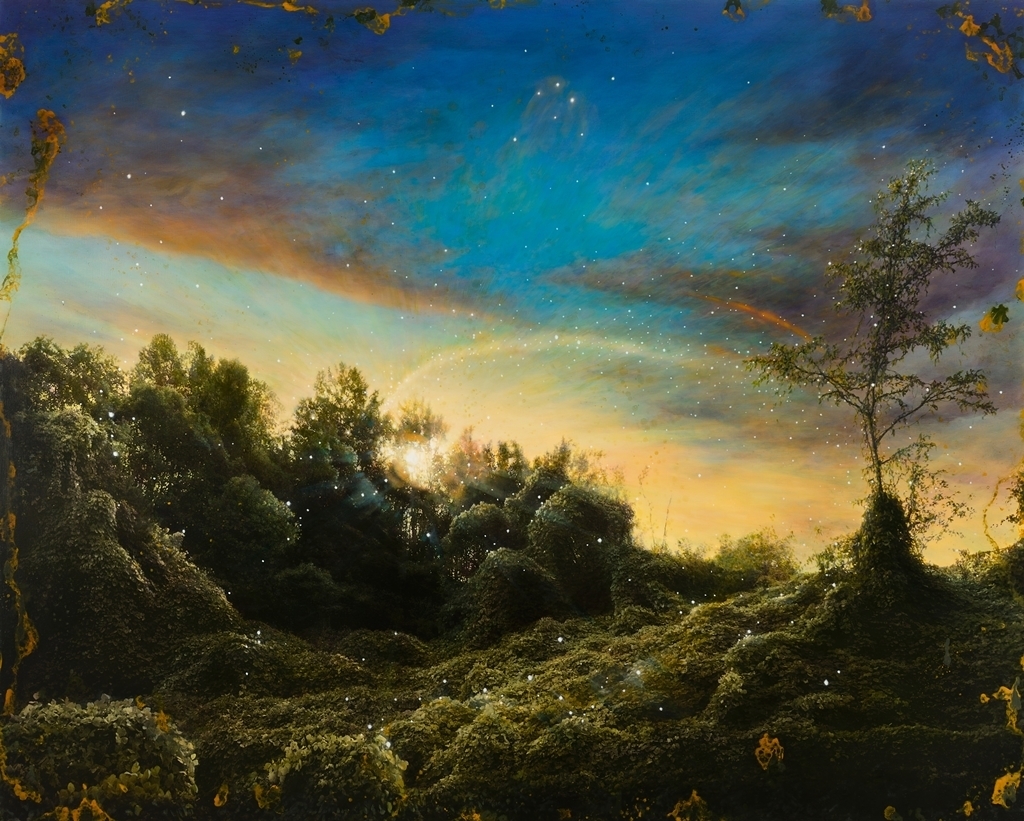
Unknown Artist- june 20th 17, 2017, Mixed Media on Canvas, 162.2 X 130.3 cm
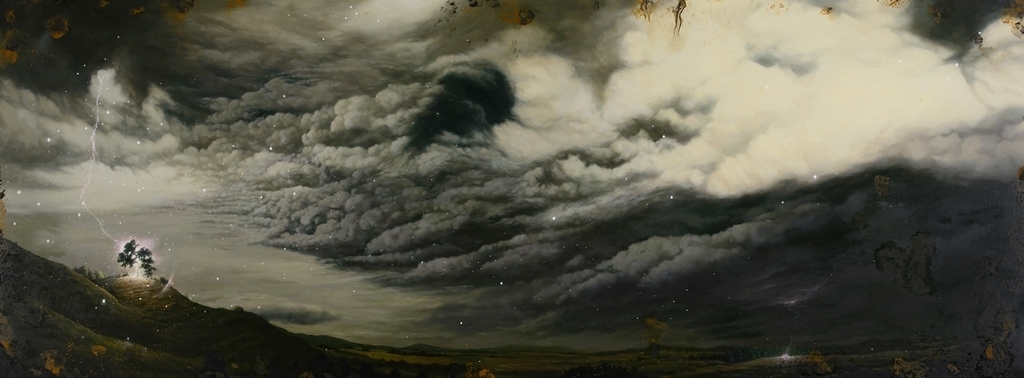
Unknown Artist- June 26th 17, 2017, Mixed Media on Canvas, 211 X 80 cm
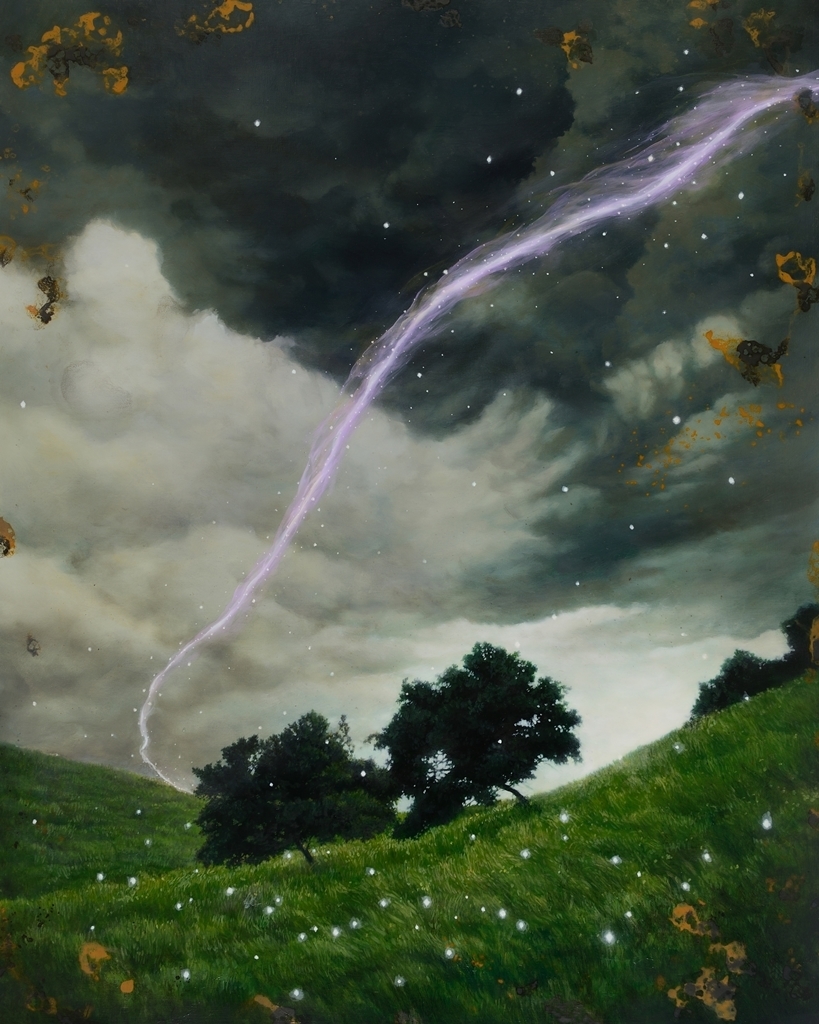
Unknown Artist- May 28th 17, 2017, Mixed Media on Canvas, 80.3 X 100 cm
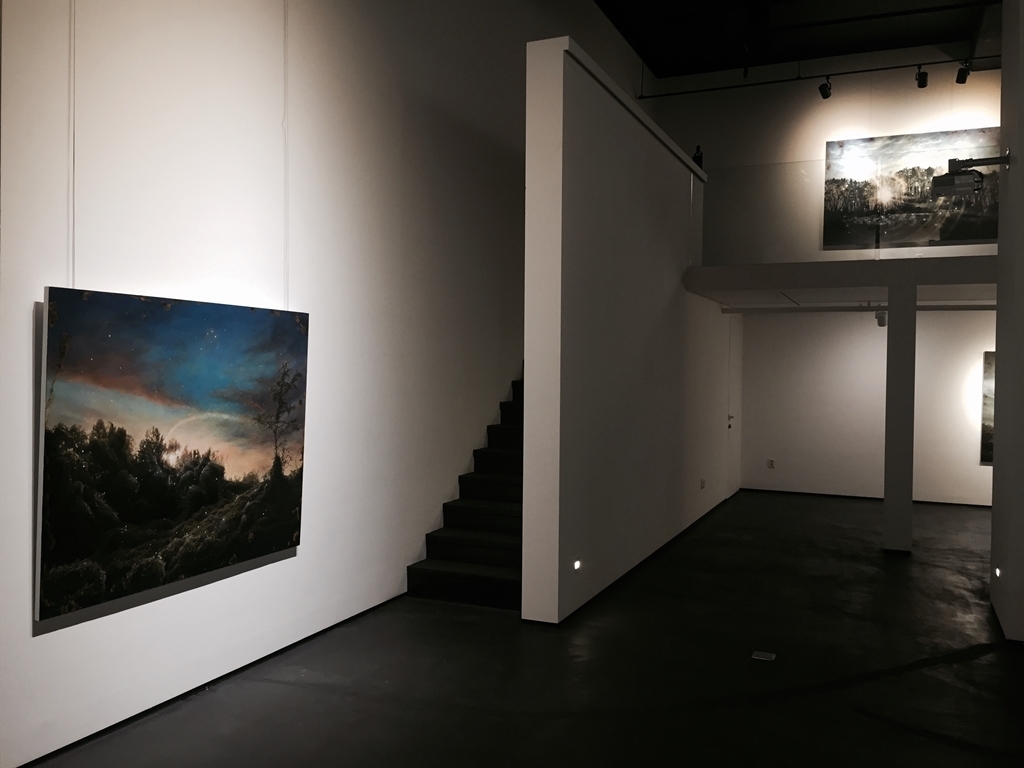
Installation View
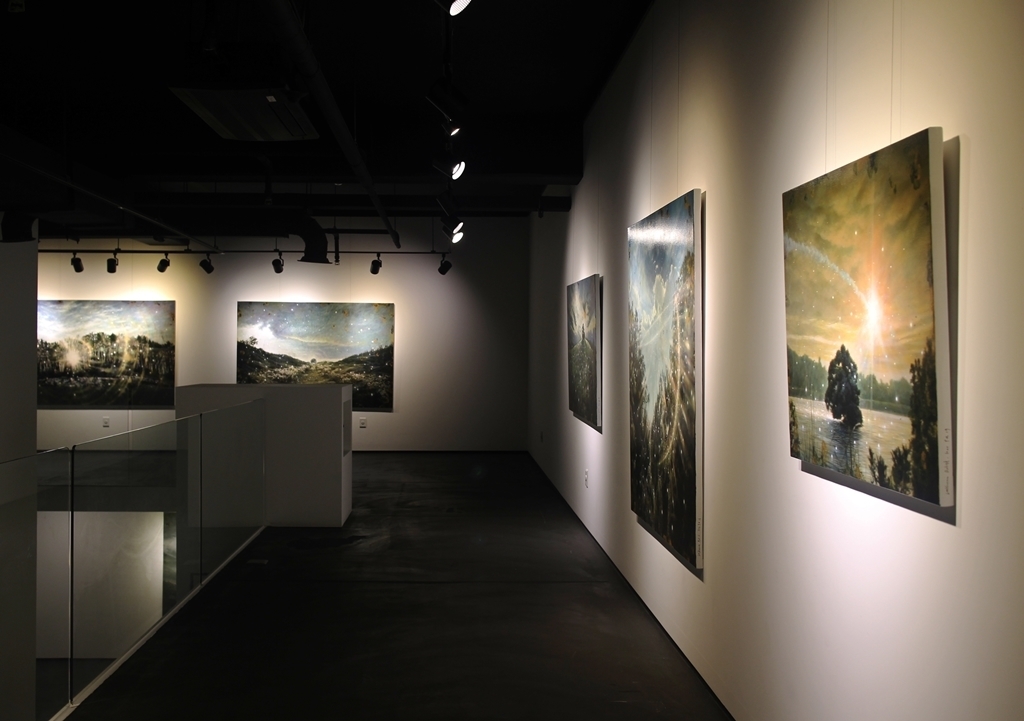
Installation View
GALLERY MARK
3, Sapyeong-daero 20-gil, Seocho-gu, Seoul, Korea
T. 82 2 541 1311
F. 82 2 541 1317
Info@gallerymark.net
Monday - Saturday ( 10:00am - 6:00 pm )
Sign up to receive emails featuring the latest events.