
PAST
낙원으로의 회귀
송진협 (평론)
고정된 프레임 속 그림을 보는 행위는 프레임에 사로잡힌 현대인의 삶을 관조하는 것과 흡사하다. 그림 속 사물과 인물, 시간과 공간은 예술가에 의해 철저히 통제되며 하나의 통일된 주제를 전달하기 위해 기능한다. 오늘날 현대인의 삶 또한 한 명의 사회적 자아에게 허락된 프레임 속에서 촘촘히 규정 지워지고 통제된다. 우리는 분과 초를 나누어 살며, 시간의 규격에 따라 봉급을 받는다. 부동산, 호적 등의 공간적 제약 또한 끊임없이 알람을 울리는 휴대폰 지리정보처럼 개인의 삶에 지속된다. 시공간적 프레임 뿐 아니라 그물처럼 얽힌 인간관계, 인과관계, 이익관계 역시 사회적 자아들을 켜켜이 고정하고 규정한다. 이들 프레임은 개인을 이해 가능한 하나의 좌표에 평면화하여 표구할 것이다.
프레임을 통해 그림을 읽어내고자 하는 평범한 행위는 강민수 작가의 연작 앞에서 철저히 실패할 것이다. 그의 작품에는 사물과 인물, 시간과 공간이 암시되어 있지만 이들 요소가 어떤 경우에도 명징하게 결합되지 않는다. 전연 관련이 없어 보이는 인물군들, 엇갈리고 뒤틀린 공간적 배경, 시점을 추정할 수 없는 시간적 흐름이 화면에 가득하다. 무엇보다 모노크롬과 자연색의 장면이 병치되어 있는 화면은 절대로 공존할 수 없는 색 스펙트럼이기에 시각적 불편함마저 불러일으킨다. 이성이 발붙일 곳 없어 보이는 이 모순된 화면에서 작가는 ‘이상향의 공간에 나의 유년 시절과 당신의 유년 시절이 서있는 모습을 상상’한다고 술회한 바 있다. 과연 이 화면이 어떻게 이상적 낙원이 될 수 있으며, 작가가 말하는 유년과는 무슨 관련이 있는 것인가?
강민수 작가의 연작 작품은 유년 이래 우리가 상실한 것을 낙원에서의 일상으로 구현해내고 있다. 그의 예술적 접근은 그러나 유년의 기억을 막연히 달콤하게 회고하는 수준을 분명히 넘어선다. 낙원에 대한 이해 또한 단순히 목가적 이상향 수준에 머무르지 않는다. 그가 제시하는 지점은 불이해/불확실/불연속 속에 환희하던 유년의 자아로의 낙원적 회귀이다. 유년이란 그저 부모의 그늘 아래 생각 없이 잘 먹고 잘 놀았던 철없는 시절 그 이상의 본질을 지닌다. 어린 시절의 자아는 주어/동사/목적어, 시간/공간으로 채 썰어져 사회적 좌표로 분화되기 이전의 원형질적 존재이다.
강민수의 화면에서처럼 우리의 유년은 한 때 철없이 날아올랐다. 작가의 느슨한 붓질은 여러 겹 캔버스를 지나쳐 갔지만 그 공간의 깊이와 높이를 결코 암시하지 않는다. 우리의 유년 또한 막연하게 연결된 사회적/물리적 좌표 속에서 그저 그대로 즐거운 느낌으로 거쳐 왔을 뿐이다. 우리는 그저 한 때 해지는 저녁 그 무엇도 바쁠 것이 없는 호수에 발을 담그고 물장구를 쳤을 뿐, 정말이지 그것으로 그 뿐이었지 매 시간 단위로 돈을 지불받거나 평방미터 단위로 돈을 지불한 적이 없다. 존재하였으나 자아를 억압하지 않는 형태로 우리는 무수한 삶의 프레임을 관통하여 유희했을 뿐이다, 지금 작가는 만화경의 한 장면처럼, 고정되지 않은 채 부유하고 분산하는 이 유희적 자아에서 삶의 낙원적 기쁨을 찾고 있다. 그곳에서 우리는 앞도 뒤도 없고 문도 창도 없는 빈 방과 빈 들에 다시 머물며 플라맹고와 대화하거나 하늘에서 내려앉는 별들에 대해 노래할 것이다.
노년의 파블로 피카소는 “어려지기까지 많은 세월이 지났네(It takes a long time to become young)”라고 술회한 바 있다. 삶의 격자와 좌표를 다 거치고 난 뒤에는, 어쩌면 우리들에게도 그간 벗어던지고 온 우리의 흔적들이 어눌하고 모순된 언어로 오래도록 잊었던 장난을 걸어올지도 모른다. 그들은 속삭일 것이다. “멈추어라, 너 정말 아름답구나!(Verweile doch, du bist so schön!)”
Return to the Idyllic World
Jin Hyuo Song (art critic)
Viewing a picture in a fixed frame is similar to contemplating the daily life of man caught in a social and physical system. The objects, figures, time and space in a painting are tightly organized by the artist to convey a single message. The modern life of an individual is firmly controlled inside of a social and physical frame to perform a specific role. We are bound by regulated time units and spatial constraints, such as receiving time-based pay and our inclusion in civil registration. The modern frame constantly alarms us every minute and second, like a smart phone GPS. Modern life is controlled and regulated not only by the space-time frame but also by our relationships with other people. This system marks and locates an individual in a comprehendible social layout.
The ordinary approach to viewing a picture through a frame will cause the viewer to fail at an interpretation of Min Su Kang's art series. In his works, he alludes to objects and figures, time and space, but these elements are not clearly or logically combined. His artworks are full of characters that seem to be unrelated to each other. In his mixed and distorted spatial backgrounds, time flows so oddly that it cannot be easily estimated. Above all, scenes of monochrome and natural colors are juxtaposed as a single screen. This unusual color spectrum, one that can never coexist naturally, causes visual discomfort to the viewer. In this illogical scene the artist is saying, “Imagine my childhood and your childhood standing in the space of the ideal.” How can this picture depict the ideal scene of childhood he is talking about?
Kang’s painting series describes what we have lost since our childhood in an odd artistic form. However, his artistic approach clearly exceeds simple recollection of sweet childhood memories. His visual interpretation of the idyll does not simply remain as clichéd pastoral scenery. He rather aims to return to a childhood that was once incomprehensible, uncertain, and discontinuous.
Childhood is more than just a period of eating, playing and gaining the support of your parents. The ego in childhood is able to freely traverse all the social and physical boundaries. The artist's loose brush strokes pass through multiple layers of canvas but never hint at the depth, height nor the boundary of space. Our childhood passes through life through vaguely connected social and physical boundaries. Once we stepped into a lake, freely squeezing water in the peaceful evening. We never thought about hourly pay or any bill by the square meter. In a form that surely existed but did not suppress the ego, we played only through countless social and physical frames of life. Now the artist finds the joy in life through this unfixed, floating and scattered ego, like a scene from a joyful and colorful kaleidoscope. In his idyllic scene there are no boundaries. No fronts or backs, no doors or windows, we are only speaking to the Flamingos in the lake.
In his later days Pablo Picasso once said, "It takes a long time to become young." After passing through countless grids and coordinates of our lives, we may regain the joy of life that we once experienced during childhood. “Stay a while! You are so beautiful! (Verweile doch, du bist so schön!)”
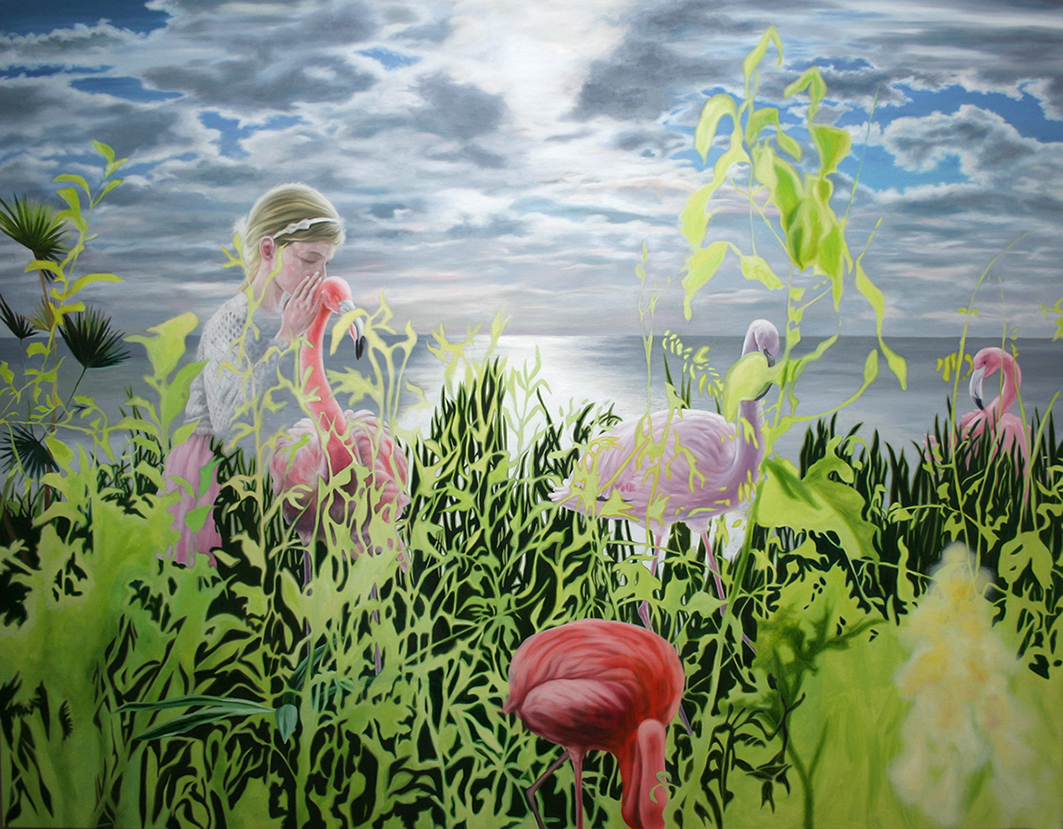
Flamengo whisperer_2018_oil on canvas_112 x 145.5cm
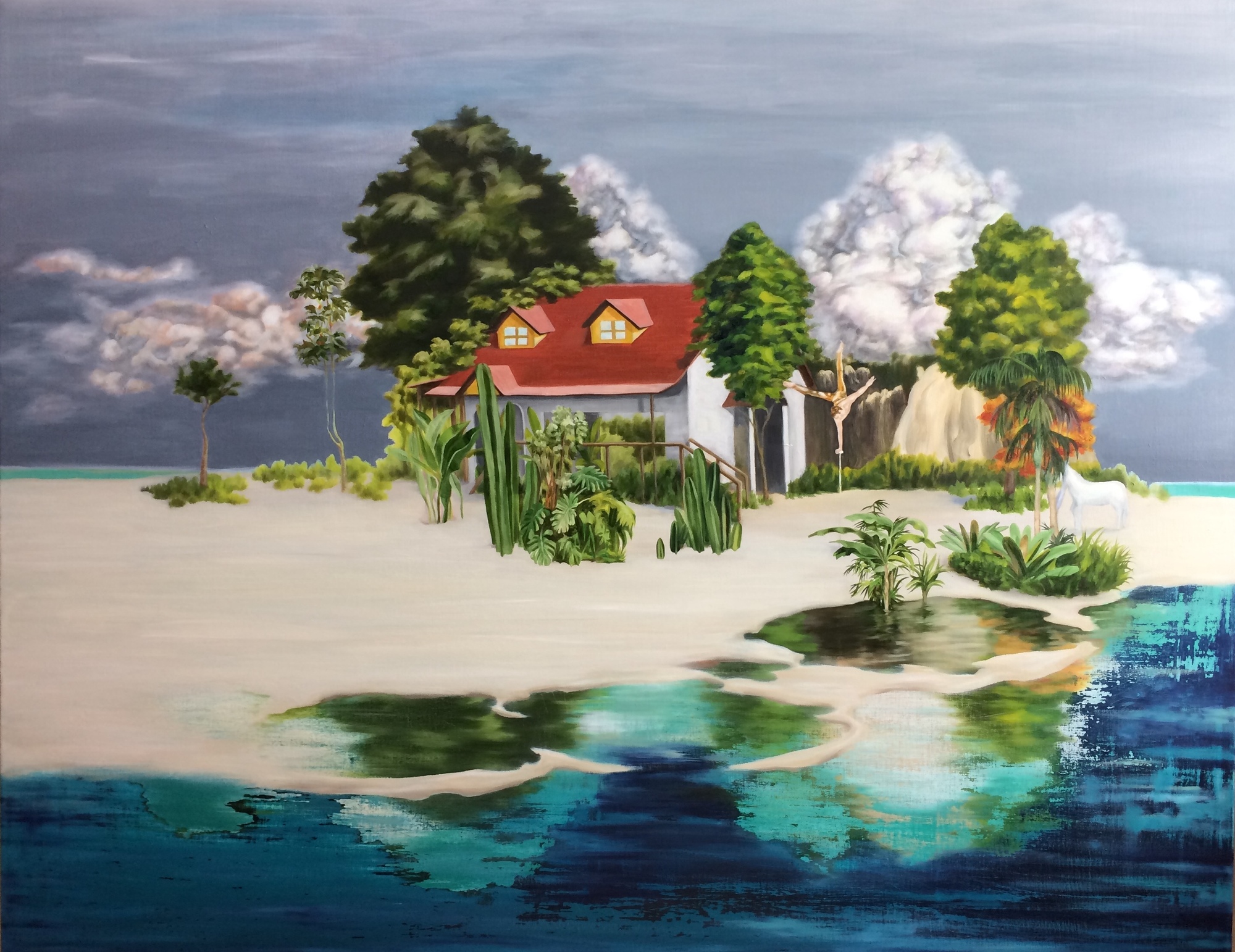
Isle_2018_oil on canvas_91 x 116.8cm
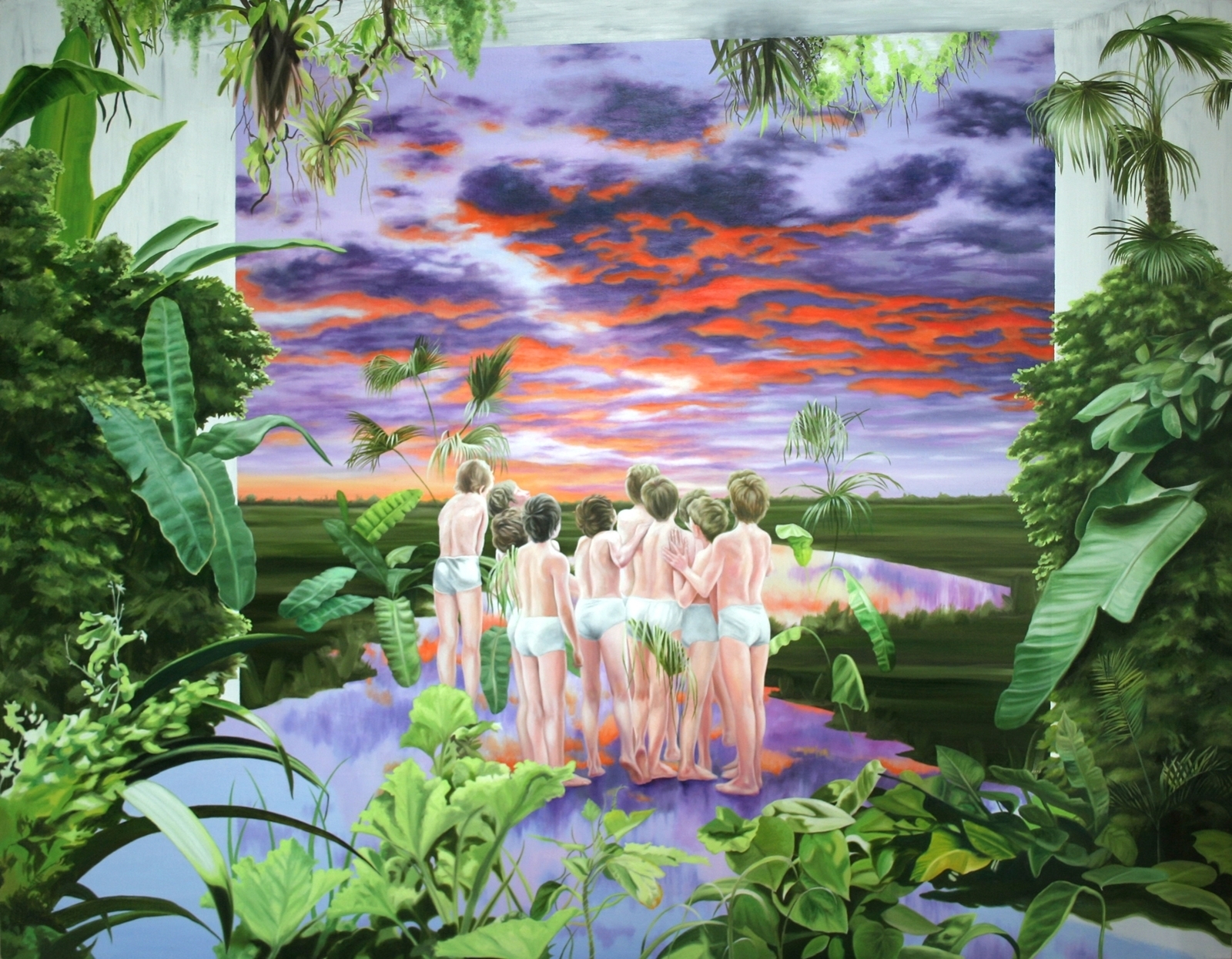
verweile doch (멈추어라) 2018 oil on canvas 112x145.5cm
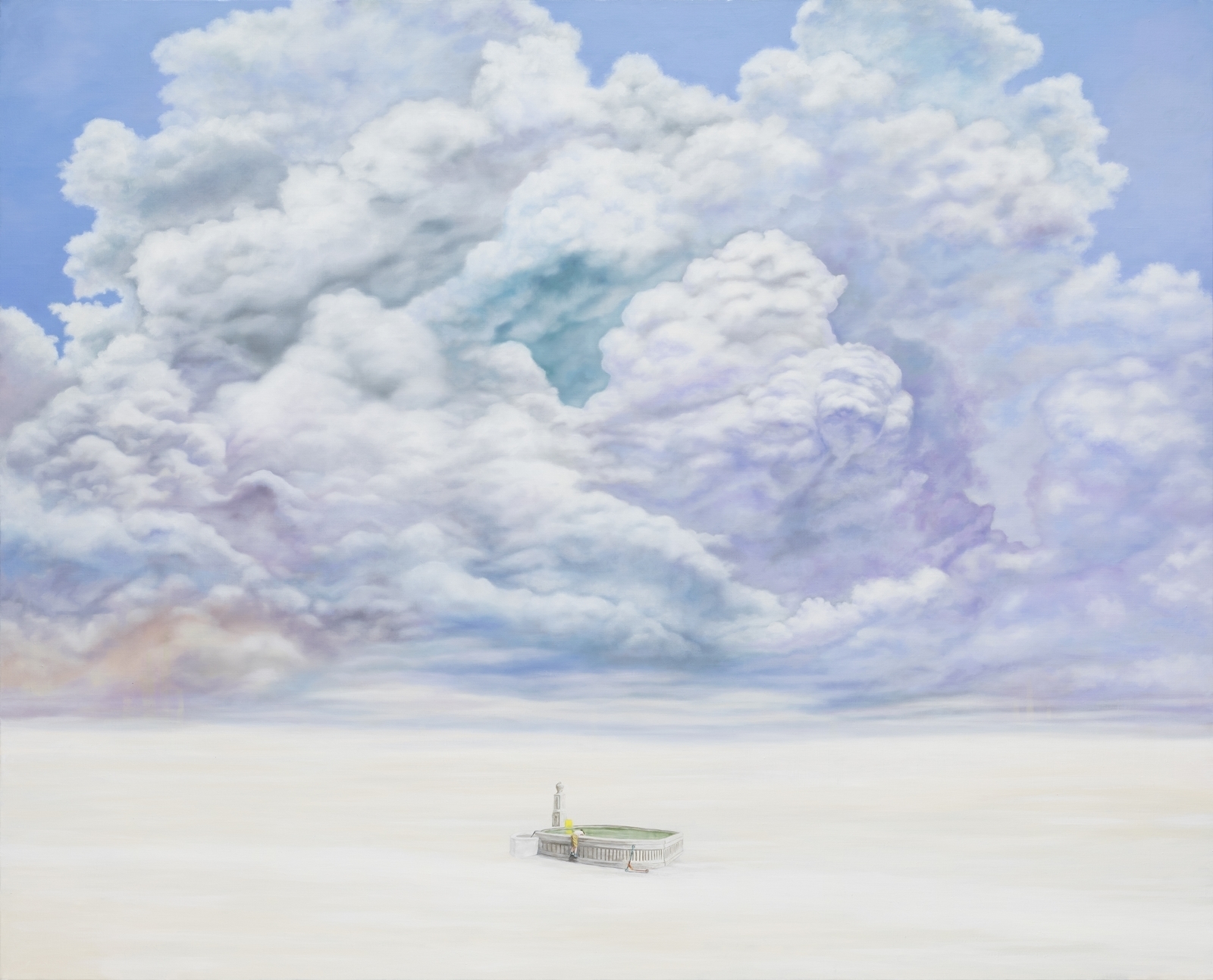
Oasis_2019_oil on canvas_130 x 162cm
GALLERY MARK
3, Sapyeong-daero 20-gil, Seocho-gu, Seoul, Korea
T. 82 2 541 1311
F. 82 2 541 1317
Info@gallerymark.net
Monday - Saturday ( 10:00am - 6:00 pm )
Sign up to receive emails featuring the latest events.